

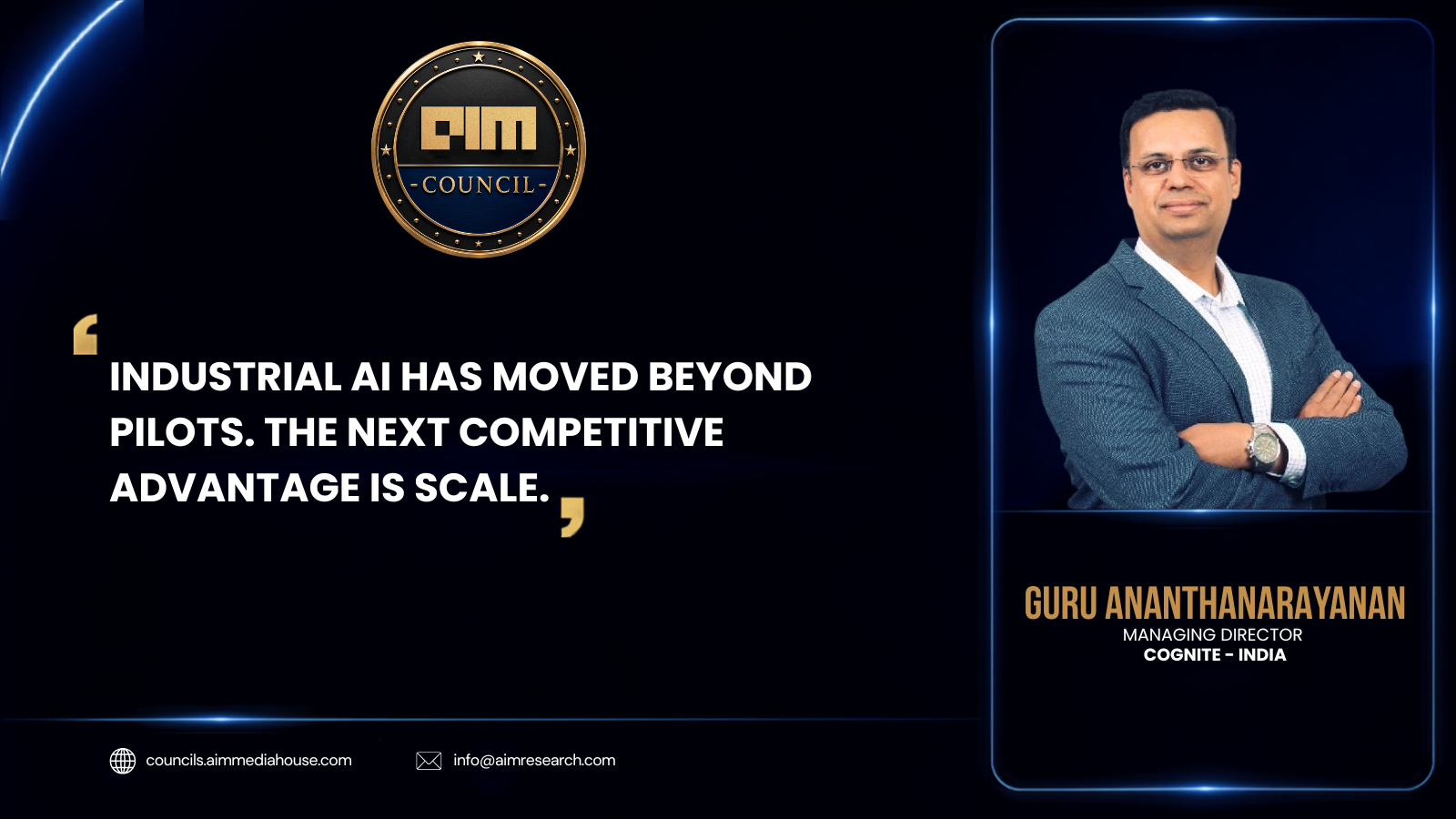
For nearly a decade, industrial organizations have invested heavily in artificial intelligence. They have built predictive maintenance models, optimized production lines, experimented with generative AI, and deployed digital twins. Yet despite thousands of successful pilots, relatively few organizations have managed to scale AI across the enterprise.
The problem is not AI. The real challenge lies in the architecture that connects industrial data, operational context, and business workflows.
Many organizations approach Industrial AI one use case at a time. Every project integrates data, builds a new data model, develops AI models, and deploys independently. While individual initiatives create value, together they result in duplicated effort, inconsistent governance, and solutions that are difficult to scale across sites.
Industrial AI requires more than connected data. It requires contextualized data. By establishing relationships between assets, equipment, processes, documents, work orders, and live operational signals, organizations create a digital representation of their operations that AI systems can understand and reason about.
The most successful organizations are shifting from delivering isolated AI projects to building reusable industrial AI platforms. A common digital foundation enables rapid development of applications including predictive maintenance, production optimization, energy management, quality prediction, compliance monitoring, operator copilots, root cause analysis, and safety management.
Once the foundation is established, every new application becomes faster, less expensive, and easier to deploy. Rather than rebuilding integrations and data models for every project, organizations reuse the same contextual foundation across multiple use cases and sites.
Industrial AI is also entering the age of intelligent agents. These agents combine large language models with real-time operational context, engineering knowledge, maintenance history, and live plant data to assist operators and engineers with troubleshooting, recommendations, and decision support.
The real value of Industrial AI comes from compounding returns. Instead of scaling linearly, where each new site requires repeating months of engineering work, organizations can deploy proven applications across facilities with minimal incremental effort.
Ultimately, success should be measured through business outcomes: higher throughput, improved yield, lower operating costs, reduced downtime, better quality, stronger compliance, improved safety, increased asset reliability, and greater production capacity without significant capital investment.
The future of Industrial AI will not be defined by the smartest AI model alone. It will belong to organizations that build a scalable digital foundation where connected, contextualized, and governed industrial data powers continuous innovation across the enterprise.