
Artificial intelligence (AI) has become a driving force behind innovation, efficiency, and competitiveness. Organizations that leverage AI effectively can gain a significant edge in their respective industries. However, as the adoption of AI proliferates across various business units and departments, managing, governing, and securing these solutions becomes increasingly complex. One compelling way organizations can address these challenges is by creating an internal AI marketplace, a unified platform where a multitude of AI agents can be developed, deployed, discovered, and consumed by different departments.
This article explores the importance of internal AI marketplaces, their benefits to organizations in governance, security, and privacy, and the transformative impact they can have on enterprise-wide AI adoption.
What is an Internal AI Marketplace?
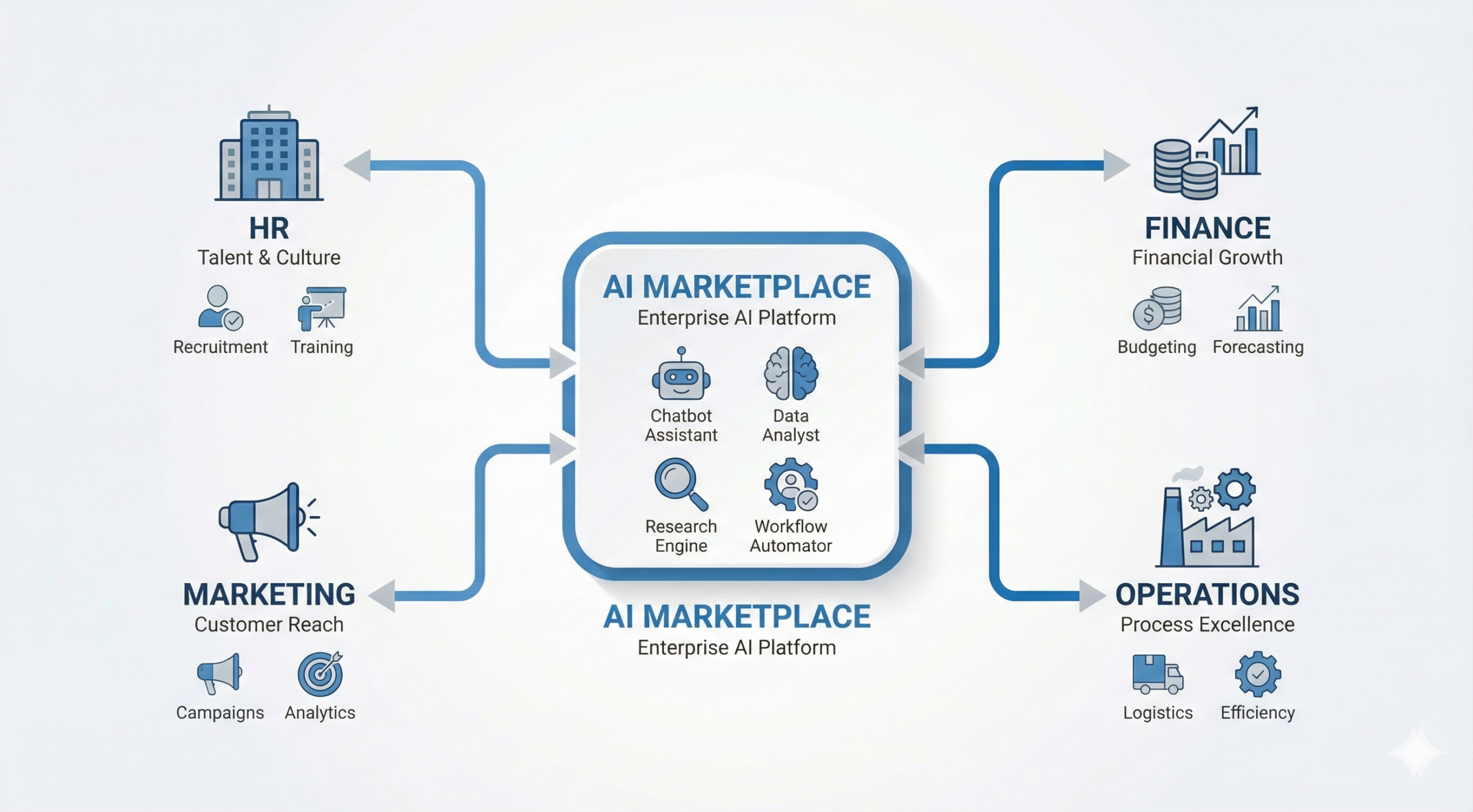
An internal AI marketplace is a centralized digital platform within an organization that houses various AI agents, services, and models. These agents can range from simple task automation bots to complex machine learning models designed for specific business functions like finance, human resources, marketing, or operations. The marketplace allows departments to easily discover, request, and utilize these AI agents, much like an app store for internal enterprise use.
Why Organizations Need an Internal AI Marketplace
1. Scalability and Reusability
One of the biggest challenges organizations face with AI is the duplication of efforts across departments. Different teams may independently initiate similar AI projects, leading to unnecessary costs, time wastage, and redundant solutions. By housing these agents in a central marketplace:
AI solutions are reusable: A chatbot created for HR can be modified for customer service, reducing development time.
Development becomes scalable: Departments can build upon existing agents rather than starting from scratch.
2. Better Governance
AI governance refers to the management of AI systems, ensuring ethical use, compliance, and strategic alignment with business goals. An internal AI marketplace strengthens governance by:
Centralizing oversight: All AI deployments can be tracked, updated, and audited from a single platform.
Enforcing standards: Best practices, coding standards, and ethical guidelines can be embedded into the marketplace, preventing rogue or subpar AI developments.
Version control: Updates and modifications to AI agents can be rolled out systematically and with full documentation.
3. Enhanced Security
Security is paramount as AI models may process sensitive data or drive critical business decisions. A marketplace offers key security advantages:
Controlled access: Only authorized users can deploy, modify, or access specific AI agents based on their roles or departments.
Vulnerability management: Security teams can regularly scan and patch agents within the marketplace, minimizing the risk of breaches.
Audit trails: All activities related to AI agents are logged, making it easy to investigate security incidents or unauthorized activities.
4. Improved Privacy
With increased global focus on data privacy regulations (like GDPR or CCPA), organizations must ensure AI solutions handle data responsibly:
Data minimization: The marketplace can restrict data exposure by providing guidelines and built-in features for agents.
Privacy-by-design: AI agents listed in the marketplace can be audited for privacy compliance before being made available.
Central data handling policies: By channeling AI solutions through the marketplace, organizations ensure all data processed adheres to corporate privacy policies.
5. Accelerated Innovation
When departments can quickly browse, experiment, and implement new AI agents, it sparks a culture of innovation:
Faster prototyping: Teams can try new models without the slow procurement or building process.
Internal collaboration: Departments can share successful AI implementations, fostering cross-functional learning.
Continuous improvement: Marketplace feedback mechanisms help improve agent quality over time.
What to Know Before an AI Marketplace
A successful marketplace for AI agents must support interoperability by integrating with various data sources, accommodating multiple programming languages, and remaining compatible with existing IT infrastructure. To encourage adoption among non-technical users, the platform should offer a simple and intuitive interface for searching, browsing, and deploying AI agents. Security is paramount, requiring robust user authentication and role-based access controls to ensure appropriate access to tools and resources. Additionally, a clear governance framework should define policies for developing, testing, updating, and retiring AI agents. Finally, the platform needs built-in monitoring and analytics dashboards to track usage, measure effectiveness, and ensure compliance of each AI agent.
Conclusion
Creating an internal AI marketplace is an investment in the future of organizational intelligence. It empowers departments to innovate safely, ensures robust governance, centralizes security and privacy controls, and ultimately drives agility at scale. With the right strategy, organizations can turn AI from a sporadic experiment into a foundation of enterprise transformation, complying with regulations, minimizing risks, and unlocking unprecedented productivity.
By establishing such marketplaces, companies ensure that AI becomes a trusted, strategic asset, fostering cross-departmental cooperation while upholding the highest standards of governance, security, and privacy. In the evolving business landscape, the organizations that build, govern, and scale their AI initiatives wisely will emerge as leaders of tomorrow.