Enterprise analytics is undergoing its most consequential transformation yet. What began as a quest for visibility, dashboards surfacing performance data across every business dimension, evolved into decision intelligence, where predictive and prescriptive models augmented human judgment. A third frontier is now emerging: agentic AI systems capable of executing bounded decisions autonomously without waiting for human interpretation.
Each stage delivers greater value than the last, but also introduces new governance risks. As organizations move from dashboards to agentic systems, the marginal value of human-driven analytics declines while governance complexity increases. The leadership challenge shifts from building analytics to designing trustworthy autonomous decision systems.
The Dashboard Plateau
In the early 2000s through 2020s, there was a self-service analytics boom driven by BI – particularly with Tableau, Qlik, Tibco Spotfire, SAP Lumira amongst other leaders. The thinking here was to equip people in the business with every dimension of information thought necessary to increase visibility of business – with the intent to improve decision quality. To support these tools and the self-service analytics paradigm, data lakes and functional data marts were invested in.
After a point, increasing KPIs measured and dashboards were thought to diminish returns in value of management attention. (Example: a large industrial company mandated standardization and rationalization of it’s 3000+ dashboards / reports to 150 or less).
Perceived reduction in value of BI could be attributed to:-
- overlap of information and myriad and sometimes conflicting views shown by self-service BI storyboards
- decision latency remain high
- insights depend on human interpretation
- action cycles remain slow
Over the past decade, enterprises invested billions in dashboards and self-service analytics. Yet many leaders acknowledge a plateau: dashboards show us what happened, but they rarely change what happens next.
The dashboards delivered:
- observability
- data democratization
- performance transparency
But limitations included:
- Cognitive overload (multiple KPIs across multiple dimensions and filters – required deep analysis of the data)
- Interpretation dependency
- Decision bottlenecks
Dashboards improved awareness but did not fundamentally change the operating cadence of organizations. Asks for simply showing the top (n) actions needed to be taken to improve the situation started coming in.
Decision Intelligence
This stage is where many companies are today – where automation powered by statistical learning / machine learning helps narrow the scope and uncertainty around decision choices. This is largely characterized by:-
- Predictive models
- Recommendation engines
- Prescriptive analytics.
While this is a cognitive leap from BI driven decisions in terms of:
- Scientifically justifiable decision quality
- Scenario evaluation
- Data-Augmented managers
Even so, humans continue to interpret outputs with episodic decisions and operating cadence still depends on meetings.
Agentic Action Systems
In this context, we refer to Agentic systems enabled by AI, capable of executing bounded decisions autonomously, within defined governance guardrails. We are now evolving a paradigm where AI agents are expected to execute bounded decisions autonomously such as with marketing campaign tuning and supply chain adjustments.
Herein, the key difference is that the system no longer waits for a human to interpret the dashboards or analyze the output of predictive / prescriptive models with their tests of validity.
The future of enterprise intelligence is not more dashboards. It is systems that move from visibility to judgment to action. The organizations that succeed will be those that operationalize AI autonomy responsibly — balancing speed, governance, and trust.
| Stage | Capability | Operating Model |
| Visibility | Dashboards – Observability | Human analysis |
| Judgment | Predictive & Prescriptive AI | Human decision |
| Action | Agentic AI – Autonomous execution | Human oversight |
Table 1: Enterprise Intelligence Maturity
Enterprise AI Delivery
Another key consideration for organizations is the placement of talent for such initiatives. While seeking quick value realization, organizations will be well served to engage architectural rigor along with agile program management and execution – to derisk solution where possible while building for scale and sustainability.
| Program Mgmt | Architecture | Execution | Potential Outcome / Risk |
| Internal | Internal | Internal | Highest control, strong institutional learning, slower initial velocity but most sustainable |
| Internal | Internal | External | Good architecture alignment with external execution dependency |
| Internal | External | Internal | Internal delivery capability but risk of architectural misalignment |
| Internal | External | External | Fast delivery but high risk of technical debt |
| External | Internal | Internal | Strong architecture but stakeholder alignment risk |
| External | Internal | External | Balanced but coordination complexity |
| External | External | Internal | Internal operations capability but weak governance over design |
| External | External | External | Highest risk — enterprise control and learning minimal |
Table 2: Enterprise AI Delivery configuration scenarios and effects
The key leadership challenge is designing organizations where autonomy scales without eroding trust. The next decade of enterprise analytics will not be defined by better dashboards, but by organizations that can operationalize AI autonomy safely and responsibly (Figure 1).
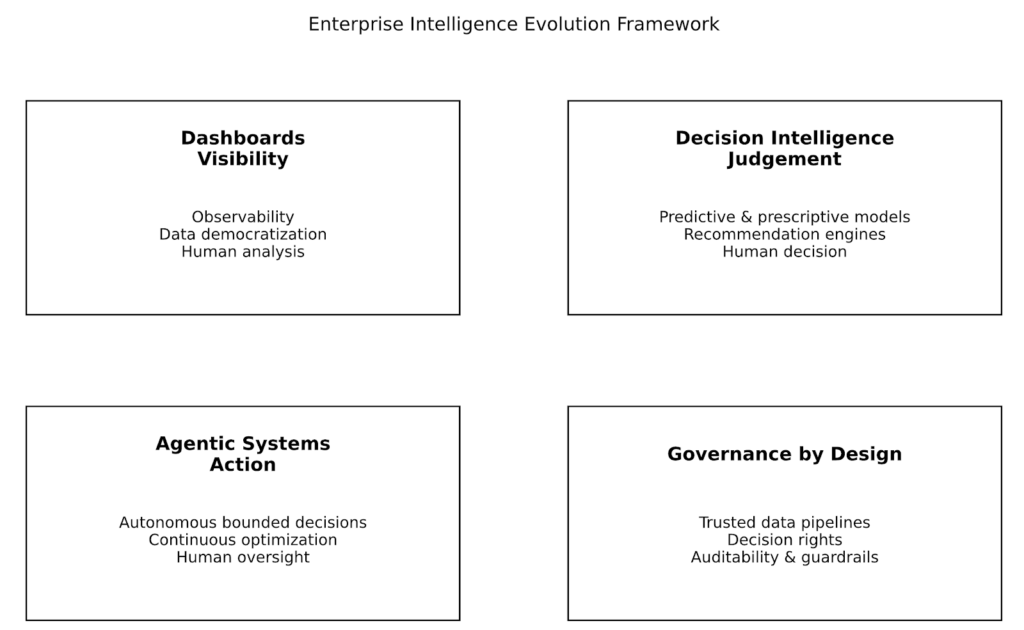
Figure 1: Enterprise Intelligence Evolution
Enterprise Intelligence Maturity
The journey from dashboards to decision intelligence to agentic AI is, at its core, a journey from seeing to thinking to doing. Each stage has delivered genuine value. Each has also raised the governance stakes considerably. The defining leadership challenge of this decade is not technological, it is institutional.
Organizations must design operating models where AI autonomy scales without eroding the trust, transparency, and accountability that responsible enterprise decision-making demands. That requires not just architectural rigor, but deliberate choices about decision rights, talent configuration, and oversight design.
The future belongs to organizations that can manage what lies beyond visibility and build trust in what they no longer fully control.Disclaimer: Opinions are personal and need not reflect the views of the author’s employer or associates.